Sarah Walker Mercer Park

Sarah Walker Mercer Park

VIENNA, Va. โ€” Sarah Walker Mercer Park is a community green space, maintained by the Town of Vienna Parks and Recreation.ย 

This neighborhood park honors the late Sarah Walker Mercer, a beloved local figure affectionately remembered as the "mother of the neighborhood".

๐Ÿ“ธ:ย absolonkent.net/photogallery/index.php?/category/692
ย 


Louise Archer Historical Marker

Louise Archer Historical Marker
VIENNA, Va. โ€” A Fairfax County historical highway marker at Louise Archer Elementary School honors the educator and principal who expanded educational opportunities for Black students in Fairfax County and helped establish some of the county's earliest 4-H clubs for African American youth.
ย 
Louise Archer served as principal of a historic one-room schoolhouse for Black children during the era of legally mandated school segregation. She worked to expand educational opportunities for African American students and was instrumental in establishing early 4-H clubs for Black youth in Fairfax Countyโ€”organizations that provided agricultural education, leadership development, and community engagement at a time when Black children were excluded from many mainstream public programs.
ย 
The Vienna elementary school that bears her name, along with the historical marker on its grounds, honors her dedication to education and community service in the face of systemic discrimination.
ย 
ย 
 

Sons and Daughters of Liberty Cemetery, Vienna

Sons and Daughters of Liberty Cemetery, Vienna

VIENNA, Va. โ€” This historic African American cemetery on Orchard Street is one of two historic burial grounds in Fairfax County associated with the Sons and Daughters of Liberty, a Black fraternal and mutual aid society active during the post-Civil War era.

Organizations such as the Sons and Daughters of Liberty were essential institutions within Black communities across Virginia after emancipation, providing burial insurance, sick benefits, and a framework for community organization that helped fill the void created by exclusion from many white civic and religious institutions.

๐Ÿ“ธ: absolonkent.net/photogallery/index.php?/category/693


First Baptist Church of Vienna

First Baptist Church of Vienna

VIENNA, Va. โ€” The first and oldest church in Vienna, First Baptist Church of Vienna, was founded on September 1, 1867, more than 20 years before the town's incorporation.

Founded by African American farmworkers George McBrown, Daniel West, and Edmund Harris on land deeded for one dollar by Union Army veteran Major O. E. Hine, the original church building was constructed along Lawyers Road using lumber obtained through the Freedmen's Bureau from a Civil War barracks that was being demolished. The structure served as both a place of worship and a public school for Black children.

In December 1957, First Baptist Church relocated from Lawyers Road NW to 450 Orchard St. NW. Near the original Lawyers Road site, a historical marker notes that the congregation held baptismal services in Hunters Branch from 1923 to 1952. The property, now known as Carter's Glen, was the homestead of Charles Carter, the grandson of a formerly enslaved man.

๐Ÿ“ธ: absolonkent.net/photogallery/index.php?/category/688


Ilda — A Racially Mixed Freedmen's Community

Ilda — A Racially Mixed Freedmen's Community

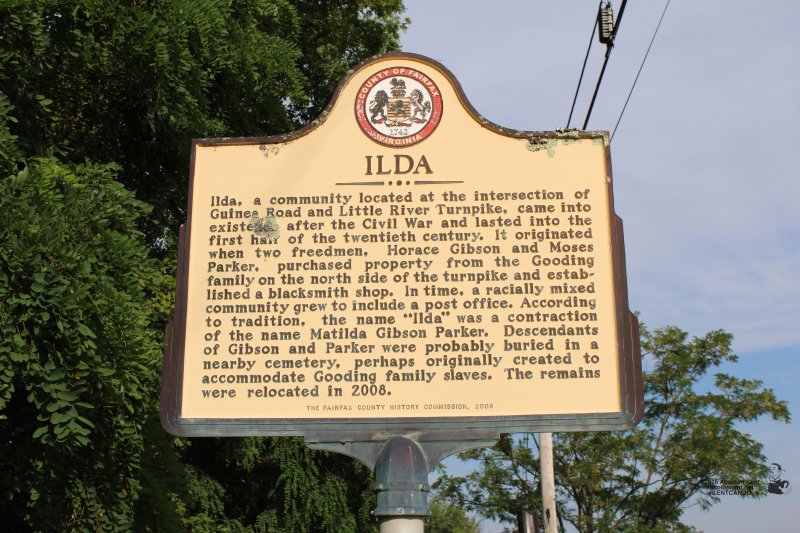
ANNANDALE, Va. โ€” Ilda, a racially integrated community took root in 1868 when Horace Gibson, a formerly enslaved blacksmith from Culpeper, purchased five acres at the intersection of Little River Turnpike and Guinea Road from the Gooding family and opened a blacksmith and wheelwright shop with his business partner, Moses Parker โ€” also formerly enslaved. Among the rarest examples in the post-Civil War South of a Black-owned business anchoring a mixed-race settlement, their shop's prime location on the well-traveled turnpike made it the cornerstone of a community that grew to include roughly 40 to 50 families at its height in the 1890s.

The settlement's name was a contraction of "Matilda Gibson Parker," Horace Gibson's daughter, who later took over the blacksmith shop with her husband, Moses Parker's son, and ran it until 1910. By the late 1800s, Gibson and Parker together owned more than 400 acres, and Ilda became one of the rare post-Civil War communities anchored by a Black-owned business that also drew white residents and patrons.

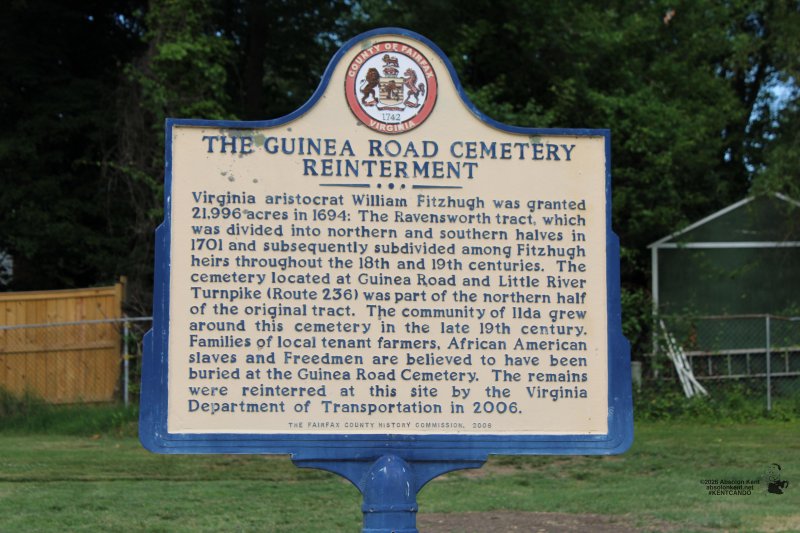
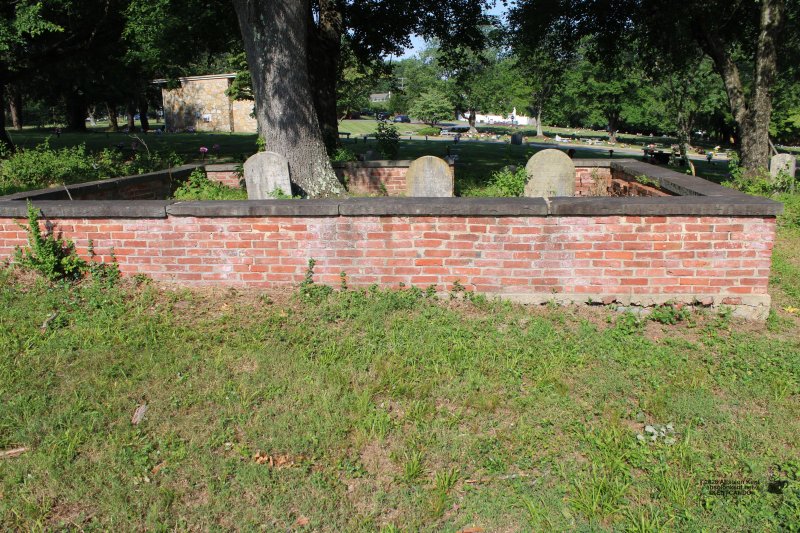
A cemetery near the crossroads held the remains of Gibson and Parker descendants, as well as people enslaved by the Gooding family; the graves were rediscovered during road-widening plans and relocated to Pleasant Valley Memorial Park in 2006 after a decades-long campaign by descendant Dennis Howard.

Ilda disappeared from the map by 1950, when the whites-only Lee Forest subdivision was built over much of the original settlement. Today, a Virginia historical marker and a small cross at the old cemetery site are the only physical traces remaining.

๐Ÿ“ธ: absolonkent.net/photogallery/index.php?/category/687